
Cues

This Book Is for You If…
✔ You know your ideas are solid, but they don’t always land the way you intend.
✔ You want to feel more confident in interviews, pitches, hard conversations, or
leadership moments.
✔ You’re realizing that connection isn’t just what you say; it’s what people feel in your presence.
This book gave me language for the invisible moments that make people feel safe, respected, and genuinely connected.
The Invisible Language of Leadership
Book Review & Reflection by Lindsay Smith, LCSW
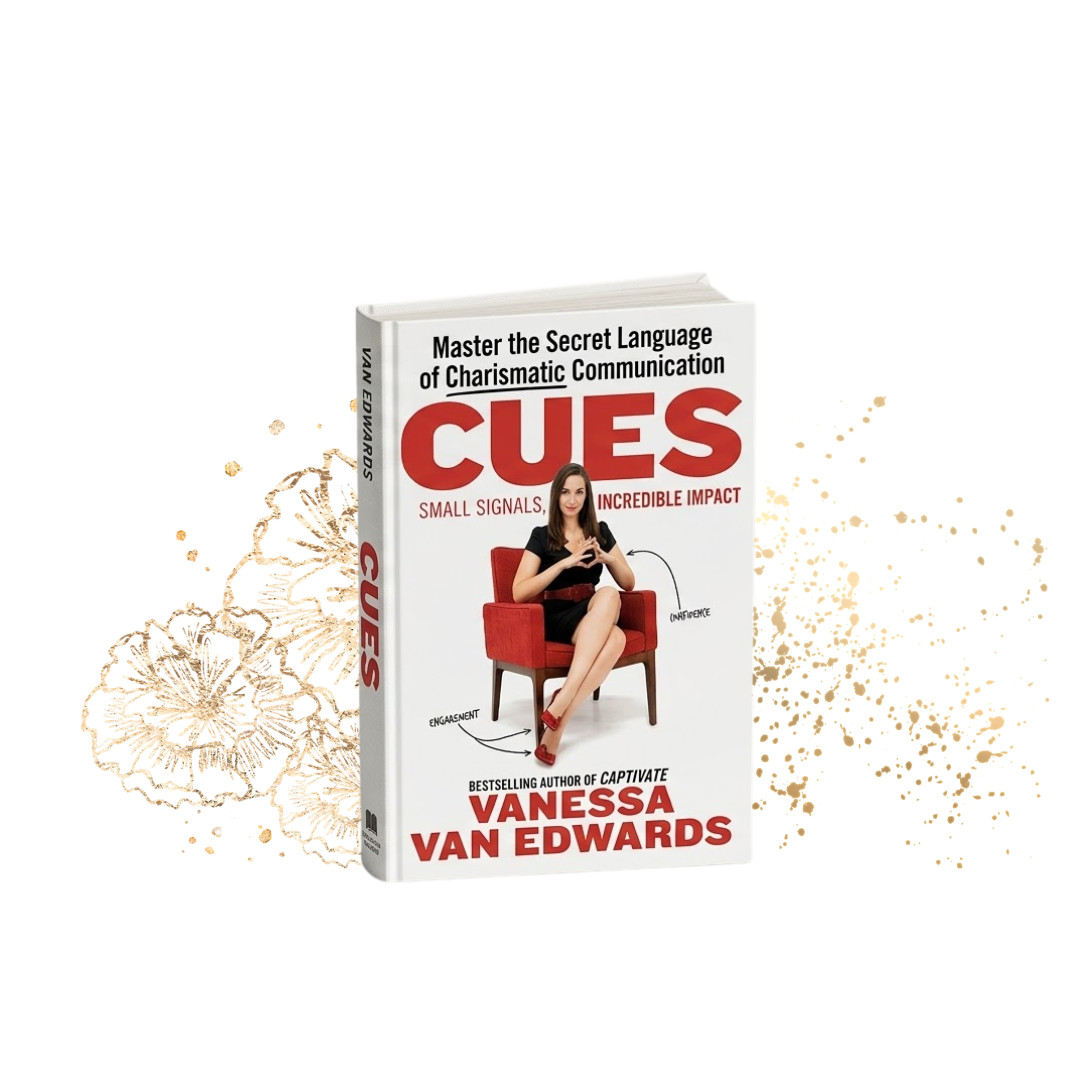
Cues: Master the Secret Language of Charismatic Communication
by Vanessa Van Edwards
Mood of the Book:
Practical, Eye-opening, Empowering
5 Gems to Fuel Growth…


Charisma is a balance of warmth and competence.
The shift I needed: We don’t get judged only by our intentions. We get read by our signals, and we can learn to send clearer ones.
Many of us try to earn credibility by stacking accomplishments and refining our message, without awareness that people often decide whether they trust us before they fully absorb our content. Vanessa clarifies that people are constantly asking, often unconsciously, “Can I trust you?” and “Can I rely on you?” When warmth is missing, competence can feel cold. When competence is missing, warmth can feel unsure.
This balance of warmth and competence contributed to my counseling centers growing quickly in the early days. In intake sessions, especially with teens who did not want to be there, I was not just doing therapy. I was sending warmth cues. I would greet the teen first, subtly include them with my eyes and body language, mirror them, and make sure they felt like a full person in the room, not a problem to be solved. I knew it worked. I just didn’t have language for why. Now I do: trust and credibility, together.

The fastest way to improve an interaction is to choose our cues based on our goal.
The shift I needed: We don’t have to be the same “version” of ourselves all the time. We can highlight certain aspects of ourselves in different situations without becoming fake.
There is a difference between being authentic and being unintentional. I’ve had seasons where I tried to “just be me,” but that version of me included nerves, over explaining, and trying to be liked. What I appreciate here is how practical this is: if the moment requires trust and collaboration, lean into warmth. If it requires authority or respect, lean into competence. For this moment. I can be true to me and still highlight different aspects of myself depending on my goal in the moment.
I thought about how often I coach leaders who are deeply warm humans and then feel confused when they are not taken seriously. Or leaders who are highly competent and then wonder why people don’t open up around them. Cues help us align what we want to create with what our body, voice, and words are communicating. And I’m still practicing. Sometimes I lean too far toward warmth when I meant to lead with strength. This gave me a clear way to self-correct without judgment.

Nonverbal cues carry most of the message, especially in the first few minutes.
The shift I needed: What our body communicates often speaks louder than the words we carefully prepare.
Vanessa shares that 65 to 90 percent of our communication is nonverbal. That statistic alone makes clear how seriously we should take presence. Before someone processes our idea, they’re reading our posture, eye contact, facial expression, distance, and tone. The first few minutes of an interaction set expectation and direction.
What I appreciate is how practical the shifts are: leaning in slightly, keeping an open posture, turning your body fully toward someone, letting your hands be visible, holding eye contact long enough to signal engagement. These are small adjustments, but they communicate availability, interest, and confidence.
I’ve caught myself believing I was being attentive while subtly signaling distraction. Half turned. Crossing my arms. Preparing my response instead of fully listening. And I could feel the difference in the room. When I’m fully facing someone, shoulders square, attention undivided, the interaction deepens. Orientation signals respect. Attention signals value. That’s not just a therapy skill. It’s leadership in practice.

Vocal tone and phrasing shape how our message lands.
The shift I needed: Even when the content is strong, delivery determines whether it feels confident, caring, or uncertain.
People don’t just listen for information. They listen for confidence and emotion. That shows up in volume, pitch, pacing, pauses, and warmth words versus competence words. This made me look at how often I unintentionally strip the humanity out of our messages because I’m trying to be efficient.
It also made me reflect on written communication, especially when something matters. The “first ten words” idea is deceptively powerful. Those words set the emotional temperature. And the postscript insight was such a practical nudge: people often read the opener, skim, and then read the P.S. If you want to leave a real impression, end with intention, not urgency.
I notice that when I’m tired or stressed, sometimes my cues don’t reflect what I want to convey: shorter texts, less warmth, faster pace. Not because I don’t care, but because I’m depleted and not being intentional. This helped me remember that how I show up is information. And I can build tiny habits, like taking a breath before speaking, using a slower pace or a warmer opener, to make my communication feel like me again.

Emotions spread quickly.
The shift I needed: We’re always shaping the emotional tone of the room, and that’s a responsibility as much as it’s an opportunity.
Humans sync quickly. Within minutes, we begin mirroring the emotional tone around us. That means encouragement spreads. Calm spreads. Curiosity spreads. So does tension. So does impatience. We often underestimate how much our presence sets the tone before we ever speak. The research makes it clear that emotional contagion is not poetic language. It’s biological reality.
When we enter a space regulated, open, and steady, we make it easier for others to do the same. I have watched a single grounded leader shift the trajectory of an entire meeting just by slowing their pace and widening their posture. The room followed. That’s influence.
And when we’re around negativity, awareness becomes protection. Vanessa explains that if we consciously label what we’re noticing in someone else, “There is frustration here,” that we’re less likely to absorb it as our own. The emotion becomes information, not identity.
Our emotions, our states are contagious. We may not control every room we walk into, but we always influence the one we leave behind.
My 3 Core Ratings (1-5)


This felt energizing and surprisingly fun in a “wow, I can use this today” way. I loved how much it validated much of what I already do intuitively, and it also helped me notice my blind spots without making me feel wrong.

This sharpened how I understand presence, leadership, and trust-building. It gave me language I can share, not just instincts I can’t explain, and it made me more intentional about how I enter a room or a call.

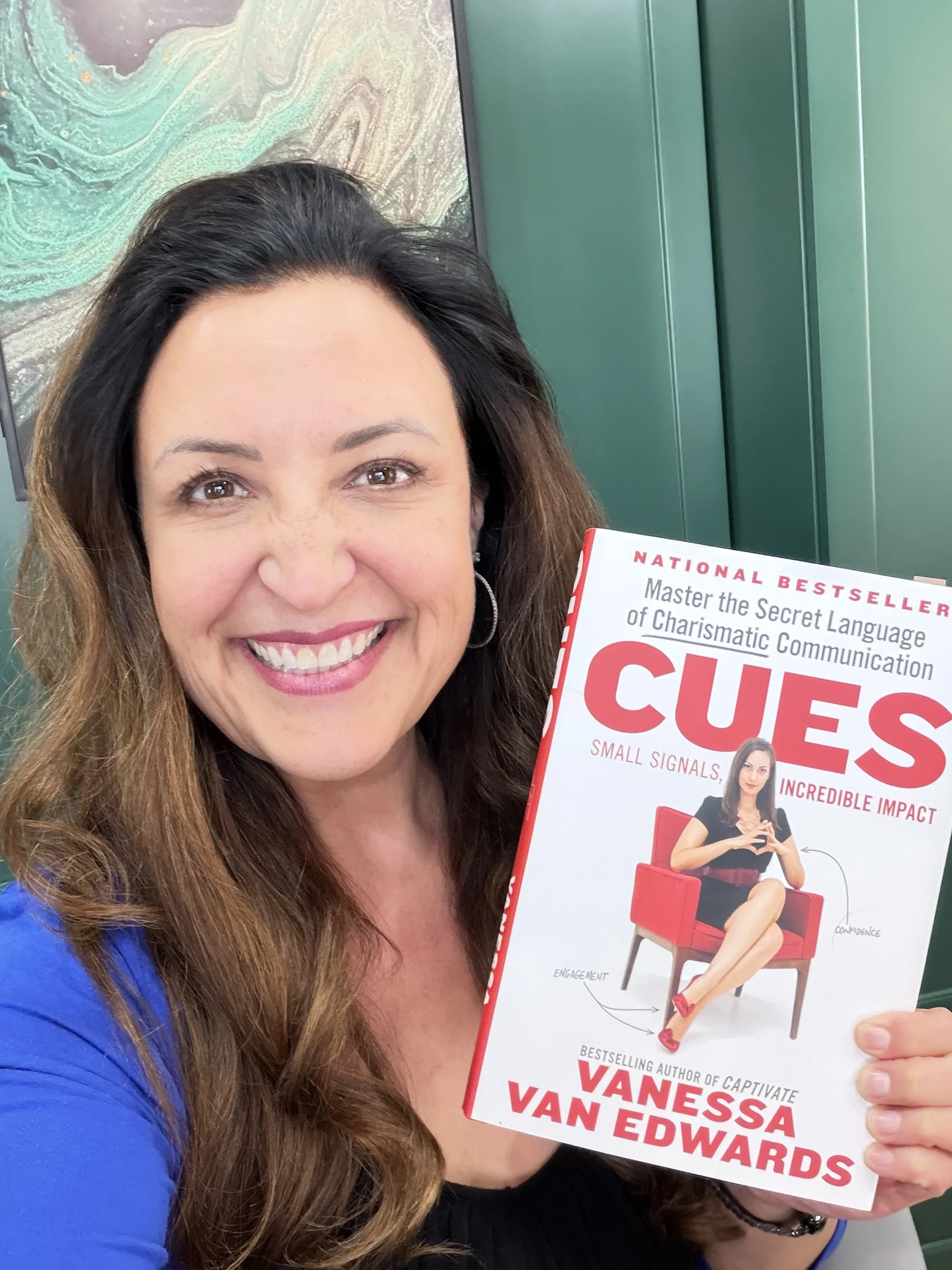
Most of the tools are small, concrete, and immediately testable. The real challenge is consistency, especially under stress, but the learning curve feels doable.
Mic Drop Moment:
“You can have the best content in the world, but if it’s not shared with the right charisma cues, it doesn’t land.”
– Vanessa Van Edwards
Notes, Nudges & Nuggets:
✔ Before a conversation that matters, pick one intention: “I want to build trust” or “I want to be taken seriously,” then choose one or two cues that match.
✔ On video calls, back up a little and let your shoulders and hands be visible so your presence feels calmer and easier to read.
✔ In emails, choose your first line like you’re setting the emotional tone of a room, not just transferring information.
✔ Pause before you respond in a tense moment. A slower pace often signals confidence more than a faster one.
If you’re thinking about picking up this book—or doing any Amazon shopping—clicking through my link helps support future reviews at no extra cost to you. Thank you so much for your support!
Final Reflection:
Your cues are the bridge between your intention and how others experience you.
_________________________
What is one cue you’re ready to experiment with, and what do you hope it helps someone feel in your presence?
Want to keep discovering books that have the power to change how we live, lead, and love?
If you'd like to keep growing alongside me, sign up to get thoughtful personal and business development book reviews delivered straight to your inbox.
Inspired by something here?
I’d love to hear how it connected with your journey - feel free to drop me a note.